
After a slip and fall accident, you will most likely have physical injuries. However, you may be wondering, can slip and fall accidents cause PTSD? In short, emotional injuries from fall accidents are certainly possible, and sadly, PTSD slip and fall injuries are usually overlooked. 

If you or a loved one have recently endured a slip and fall accident, it is imperative that you discuss your slip and fall injury with an injury lawyer in Wisconsin to protect your legal rights. Gingras, Thomsen & Wachs, LLP is a personal injury law firm that provides compassionate representation to those suffering from mental health issues after enduring slip and fall accidents. 

In this blog post, we discuss how a slip and fall accident can cause emotional distress and emotional trauma as well as how you can recover compensation for impacts to your mental health after such accidents. 

Slip and fall injury

Understanding How Psychological Injuries Can Arise with Physical Injuries in a Slip and Fall Accident

For many people, a slip and fall accident can be incredibly embarrassing. You may find yourself surrounded by strangers as you try to assess your slip and fall injury. The physical pain and physical symptoms may initially be the only thing on your mind. 

However, the pain you feel may cause psychological impact, especially if chronic pain develops and imposes limitations on your daily life. As a result, it is always ideal to seek medical attention that includes medical treatments for both physical and psychological well-being. When these injuries could have been prevented if someone hadn’t been negligent, damages can be sought in your slip and fall case.

The Psychological Consequences of Slip and Fall Accidents

In slip and fall accidents, it is incredibly common to experience emotional trauma and emotional distress that go beyond your chronic pain to harm your mental health.

Post-Traumatic Stress Disorder

Post-traumatic stress disorder can occur with victims in a slip and fall case. With this condition, emotional trauma may arise as flashbacks, intrusive thoughts, nightmares, and anxiety. Facing the location where your slip and fall occurred may present such emotional distress that you engage in avoidance behaviors to keep away from similar circumstances. The long-term consequences of this type of emotional trauma are common after a car accident, though it is possible to experience these symptoms of PTSD after a slip and fall.

Depression

Your emotional trauma may also lead you to experience depression that affects your mental health. Common symptoms include sadness, hopelessness, and the need to isolate from loved ones. 

Your self-esteem may have been impacted either from the accident or during your recovery process as you initially realize the severity of injuries and how they play a crucial role in your daily life. If you experience depression, you should seek professional help to work through this emotional trauma.

Anxiety

Anxiety disorders of any kind are a form of emotional trauma. You may have panic disorder, generalized anxiety disorder, or develop a new fear that results in avoidance behaviors. Treatment can help you manage your symptoms after your falling accident, and a personal injury lawyer can help you seek compensation through the legal process.

Fear of Falling

In addition to the fears that anxiety can bring, you may become fearful of having another fall. These fears can impede your life, causing you to avoid even benign situations. 

Regardless of the type of mental suffering you experience after this type of accident, you should seek appropriate treatment during your recovery period to manage symptoms. If you are suffering in pain from your injuries and you find that the mental impacts are interfering with your life, make sure that you discuss your personal injury claim with an attorney. 
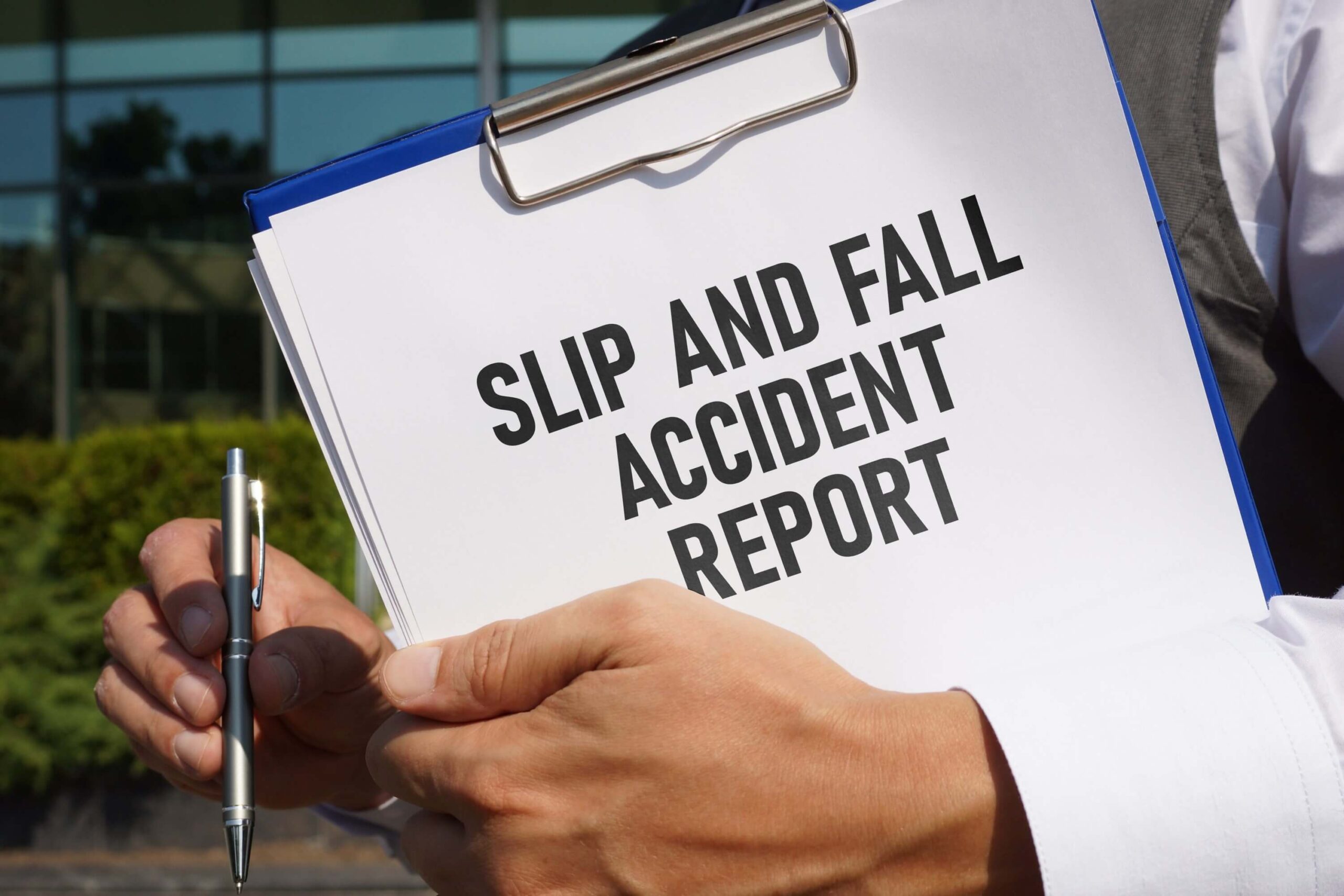
Slip and fall accident report

Legal Rights for Slip and Fall Psychological Trauma

Slip and falls are part of a category of personal injury claims known as premises liability. Under the laws for premises liability, property owners are required to keep their property free of hazards and dangers that could bring harm to any invited guests.

These laws apply to both private property owners as well as owners of businesses and commercial properties. If someone falls on their property as a direct result of the owner’s negligence, that owner can be held liable for physical and mental impacts they cause victims. 

For example, you may have gone to a nearby restaurant to enjoy a meal. However, the owner of the restaurant had flooring that was coming up, causing a hazard. They knew or should have known about this dangerous condition on their property yet failed to repair it or sufficiently place barriers and warnings to prevent you from getting hurt. As a result, you fell and broke your arm in several places. Now you’ll need physical therapy, and due to your profession, you are unable to work until this injury heals, causing you lost wages. This event can lead you to suffering the mental impacts as well. 

What all victims should know in these situations is that they need to be on high alert when the insurer of the property owner attempts to offer compensation. Most of these initial offers will be insufficient in covering all of your medical expenses, including for PTSD treatment. Victims should always consult a lawyer first to ensure the offer is fair, or they may lose the opportunity to seek additional compensation for their damages. 

How a Fall Attorney Can Help You Seek Recover Compensation

A slip and fall accident can leave you in tremendous pain while causing PTSD and other mental impacts. When you have been hurt because a property owner was negligent, you deserve to recuperate your financial losses from physical and mental consequences of this incident.

Gingras, Thomsen & Wachs, LLP is committed to assisting victims in these upsetting situations. We aggressively advocate and negotiate for a fair amount while handling the entire legal process. You’ll be able to focus on healing while we hold those responsible for your physical and mental injuries accountable. Schedule a free case evaluation today to find out if you can seek damages for PTSD in your case. 

Milwaukee County paid the estate of Ceasar Stinson, a beloved Milwaukee community activist, and Chipo Stinson, his wife, $500,000 in partial settlement for the limits allowed under state law for the January 2020 fatal vehicle collision caused by sheriff’s deputy Joel Striecher’s reckless driving, a case now handled by our Milwaukee civil rights and injury attorneys.

A historic ruling from Wisconsin Federal Court allows Stinson’s estate, represented by GTW partner Mark Thomsen, to have a jury determine under federal law whether former deputy Stricher’s reckless actions violated Stinson’s federal constitutional rights (for amounts not capped by state law).

On January 25, 2020, Streicher was on duty traveling northbound on North 10th street in a sheriff’s SUV when he ran a red light and struck Stinson, who was traveling westbound with the right-of-way on West State Street. Streicher was driving at about 30 mph for over 11 seconds after the light turned red, never braked and was driving in a right turn-only lane when he went straight through the intersection, killing Ceasar Stinson.

The lawsuit filed by attorney Thomsen claimed that the reckless actions of Streicher resulted in the violation of both Stinson’s rights under state law as well as his due process rights under the Fourteenth Amendment.

Under Section 1983, an individual has the right to sue state government employees and others acting “under color of state law” for civil rights violations. It is clearly established that when a law enforcement officer engages in reckless criminal conduct which results in bodily injury or death, the plaintiff’s right of recovery is governed by federal law.

In May of 2020, Streicher was charged with a felony and pled guilty. He was sentenced to six months in jail. However, it came to light that Streicher was fitted for a GPS monitor and placed on the Electronic Monitoring Program at home. When Cearra Stinson, Ceasar’s daughter, discovered the ploy and cried foul, the court ordered him back to jail.

In moving forward with a jury trial, Thomsen seeks to recover additional justice and damages for the estate beyond the $250,000 per person maximum for personal injury claims made against the county government under state law.

Read the decision here.
Read the initial lawsuit here.

Additional News Coverage:

https://www.youtube.com/watch?v=ChZx7crFreo

https://www.cbs58.com/news/milwaukee-fire-department-responds-to-accident-needing-extrication-near-10th-and-state

https://cbs58.com/news/attorney-hired-for-stinson-family

https://www.wisn.com/article/lawsuit-targets-former-deputy-jailed-in-deadly-crash/37174535

Related GTW Updates:

https://gtwlawyers.com/blog/criminal-charges-filed-in-wrongful-death-of-community-activist-cesar-stinson/

https://gtwlawyers.com/blog/judges-public-has-right-to-know-former-deputys-discipline-records/

https://gtwlawyers.com/blog/gtw-attorney-hired-by-stinson-family-the-family-wants-to-know-what-was-going-on-in-the-squad/

Gingras, Thomsen & Wachs, LLP Settle $5.25 Million Wrongful Death and Personal Injury Suit Resulting From Drunk Driving Accident

GTW attorneys Robert Gingras, Michael Luebke and Kim Sweatt recently settled a wrongful death and personal injury lawsuit that occurred as a result of a drunk driving accident.

On the afternoon of October 14, 2018, Kevin and Amy Sylve were on their way to a pumpkin patch in Sun Prairie, Wisconsin, after spending the weekend preparing for Halloween. The Sylve couple were high school sweethearts with two daughters and twin grandsons. As the couple approached the pumpkin patch, Kevin slowed his Toyota Camry, activated his turn signal and began the left turn into the pumpkin patch.

Nicholas Hanley had spent the day drinking alcohol and smoking marijuana. Mr. Hanley had a record of drunk driving including four prior charges and three convictions. On October 14, he was driving an illegally modified monster truck at more than 70 mph on a country road with a 55 mph speed limit. Mr. Hanley attempted to pass the Sylves as they turned left into the pumpkin patch.

The resulting crash was horrific. Witnesses heard Mr. Hanley downshift his monster truck and accelerate into the Sylves’ vehicle. Despite resuscitation efforts, Kevin passed away at the scene.

An ambulance rushed Amy to the University of Wisconsin Hospital with severe injuries.

Gingras, Thomsen & Wachs represented the Sylves in their wrongful death and personal injury lawsuit against Mr. Hanley, as well as his business A+ Storage, Inc. Attorneys Robert Gingras,

Michael Luebke and Kim Sweatt successfully litigated and negotiated a $5.25 million settlement with Mr. Hanley’s insurers.

“Our communities are plagued by drunk drivers. Those who make the decision to drink and drive must be held accountable for their actions. This settlement sends a message that our community will not tolerate endangering the lives of innocent people,” said attorney Robert Gingras.

In the pending criminal case, Mr. Hanley faces nine felony charges including homicide by intoxicated use of a vehicle, injury by intoxicated use of a vehicle and OWI (4th).

Gingras, Thomsen & Wachs represents individuals in personal injury, civil rights and employment lawsuits. The firm has offices in Eau Claire, Madison, Milwaukee and Waukesha.

Partner Dana Wachs recently resolved a personal injury case in the amount of $400,000. The accident involved a nonsurgical back injury sustained when a semi-truck driver unexpectedly drove his truck forward at a loading dock, causing our client to fall to the cement floor of a warehouse.

The goal of Gingras, Thomsen & Wachs is to let clients focus on recovery while we handle the rest. Our talented team brings the fight, passion and dedication against all personal injury cases – whether they involve a car, truck or boat accident, defective product or any other situation where someone else’s negligence causes harm.

Image via Fox 6 Now

Our team in Milwaukee is honored to be representing Mahud Villalaz as he pursues further charges following an acid attack on Friday, November 1. We are committed to assisting our client with anything he may need and ensuring that he is able to move forward from this difficult time.

To learn more, read this article from Fox 6.

Man at Doctor's Office with nurse and doctor

Since the passage of the Patient Protection and Affordable Care Act of 2010, commonly known as Obamacare, there have been a number of changes in health care law throughout the United States. Healthcare is a large part of the nation’s economy and often comprises a large percentage of state budgets. With changing demographics and the baby boom population approaching retirement age, it is important for you to know how Wisconsin healthcare law affects you.  

The dominant source of healthcare coverage in Wisconsin is through employers. Wisconsin employers provide health insurance coverage for 55% of the population, while Medicare and Medicaid cover 17% and 13% respectively. Wisconsin’s uninsured rate is 9%, which runs 4 percentage points below the national average.  

During the 2018 gubernatorial election, healthcare in Wisconsin was a major issue for both candidates. Many were concerned about whether Wisconsin would allow insurance companies to deny coverage for individuals because of a preexisting condition. Citizens were concerned that if they had a previous health event or a chronic disease, then they may be denied coverage if they lost their jobs. This is concerning because of the rising costs of healthcare and the potential financial ruin which can befall a family without necessary coverage.  

After the election, the Wisconsin State Assembly passed Assembly Bill 1 that set specific open enrollment periods for all Wisconsinites to enroll to get the coverage they need. Assembly Bill 1 also included an exclusion for preexisting conditions:

A group health benefit plan or a self-insured health plan may not impose a preexisting condition exclusion for any time on a participant or beneficiary under the policy or plan. No claim or loss incurred or disability under an individual health benefit plan may be reduced or denied on the ground that a disease or physical condition existed prior to the effective date of coverage. An individual health benefit plan may not define a preexisting condition more restrictively that a condition, whether physical or mental, regardless of the cause of the condition, for which medical advice, diagnosis, car or treatment was recommended or received.

This language would prevent insurance companies from denying coverage to treat a pre-existing condition and would not allow an insurance company to charge a higher rate based on the current health of the individual. The law goes further and does not allow companies to set lifetime or annual limits on how much they will pay for a patient’s healthcare. Both of these elements work in concert to ensure patients are not denied coverage because of an illness. They keep the costs down for those that may suffer from a disease. Most importantly, they make sure individuals will not be denied coverage due to a cap on payment for their treatments.  

Connect with Gingras, Thomsen & Wachs, LLP 

Wisconsin healthcare and insurance law can be a confusing issue to deal with in a time when you need comfort and certainty. If you feel your provider has not covered you or a family member in the way they should have, please call any of our Gingras, Cates & Wachs locations to speak with an personal injury attorney that will assess your case and assist you.  

GCW Blog Toxic Mold

In recent years, “toxic mold” has become the subject of mounting health concerns as well as numerous lawsuits. Because the scientific explanations of mold are both complex and technical, numerous misconceptions have crept into the popular perception of toxic mold and its dangers. These misconceptions only add to the widespread fear of mold at home, in schools, in the workplace, and elsewhere. And coverage in the media and on many websites has often been misleading or inaccurate. Here’s what you should know about toxic mold and how to deal with it.

What Is Mold and Where Does It Grow?

A mold is a form of fungus that grows both indoors and outdoors and thrives in warm, damp, and humid environments. There are over a thousand different varieties of indoor mold, and the good news is that the presence of a moderate amount of mold in your home is generally not harmful to your health. Most health problems related to mold exposure arise only when there is a build-up of high concentrations.

Some amount of mold is more or less everywhere all the time. Its many forms are so common and it travels so easily that trying to make your home or any other building totally mold-free would be next to impossible. But high concentrations of mold, which might result from flooding, for example, can be cleaned up and eliminated for the most part (though such cleanup may in some cases prove costly and laborious).

Because mold thrives in warm, damp, and humid places, indoor mold is most commonly found in areas of high moisture and low ventilation, such as bathrooms and basements. It is also commonly found in and around leaks in roofs, pipes, windows, or where there has been flooding. Potted plants are also a common location for mold.

In addition, mold also grows in all sorts of common building materials. It thrives in wood and wood products, paper and paper products such as wallpaper, ceiling tiles, drywall, and cardboard. It grows in fabrics such as carpets and upholstery. It can also be found in other building products including paint and insulation. It even likes dust.

What Is “Toxic Mold”?

The term “toxic mold” is somewhat misleading and has led to misunderstandings and confusion regarding the health-related dangers of mold. In high enough concentrations, all molds, toxic or otherwise, may cause health problems. As a result, some sources refer to all mold as “toxic mold.”

Strictly speaking, however, there is no such thing as toxic mold. A few forms of mold are called “toxigenic,” meaning that under certain conditions they can produce small molecular toxins, called “mycotoxins.” These mycotoxins are usually spread by way of the mold’s spores and may be the cause of potentially serious health problems if ingested in sufficient quantities over time.

In contrast with mold in general, which is to be found virtually everywhere, toxigenic molds are less common. Two of the best-known examples of so-called “toxic mold” include:

  • Stachybotrys chartarum: Sometimes called S. chartarum or Stachybotrys atra, and popularly known as “black mold”. This toxigenic mold is a greenish-black fungus that requires a moist environment in which to grow and is most commonly found in flood-damaged buildings. The mycotoxins produced by Stachybotrys chartarum are potent, but there is some evidence that only a few strains of Stachybotrys chartarum are toxigenic, indicating that this particular type of “toxic mold” may be quite rare.
  • Aspergillus: Aspergillus is a family of molds, and only some Aspergillus molds are toxigenic. The mycotoxins produced by toxigenic strains of Aspergillus are less potent than Stachybotrys chartarum mycotoxins, but infestations of Aspergillus mold are probably far more common. Aspergillus may be found in any of the mold-friendly environments discussed above.

How to Get Rid of Mold

As noted above, there is always a little mold present in any building, and this does not generally pose a health risk to its occupants. Once a mold infestation has been detected, however, clean-up and removal of the mold are strongly recommended, regardless of whether the mold is toxigenic or not.

  • Hard surfaces: Removal of mold from hard surfaces can normally be achieved by using special cleaning methods or “protocols” developed specifically for eliminating mold. It is very important to strictly follow such cleaning protocols because of the danger of mold spores being released and spreading invisibly during cleanup.
  • Porous surfaces: Where mold has infested porous or absorbent surfaces the only viable solution is removal and replacement of the material that has been infested. This includes everything from rugs to drywall, wallpaper to ceiling tiles. Where mold has penetrated behind walls and inside building materials, extensive renovations may be required.

Speak with a Gingras, Thomsen & Wachs, LLP Attorney

Have more questions about toxic mold or want to speak to an injury attorney? Contact our dedicated team of Gingras, Thomsen & Wachs, LLP today to learn more.

GCW Blog Identity Theft

If you believe that you are a victim of identity theft or fear that you may become one take these steps immediately!

  1. Take notes: As you make phone calls or send letters, keep notes of your conversations and correspondence with authorities and financial institutions, including dates, names, and phone numbers. Also, track all time spent and expenses you incur; you can deduct theft-related expenses on your income tax return, assuming you itemize deductions, and you may be able to seek compensation if you are ever able to sue the thief.
  1. Contact the credit bureaus: Call or visit the websites of the three major credit bureaus and ask that they issue a fraud alert and attach a statement to your credit report: Equifax, Experian, and TransUnion. Also, get copies of your credit report from each of the credit bureaus. Look for all possible signs of trouble: accounts you didn’t open, inquiries you didn’t initiate, and defaults and delinquencies you didn’t cause. Also, check your identifying information carefully.
  1. Review your credit reports: After you receive your credit reports from the three credit bureaus, review them thoroughly. Immediately report any suspicious information or activity to the credit bureau that issued the credit report.
  1. Call the police: File a report of the crime with your local police department. Provide as much evidence as you can, and ask the officer to list all fraudulently accessed accounts that you know about on the police report. Be sure to get copies of the police report, because creditors will probably ask to see them. Remember to log the phone numbers and names of all the law enforcement agents that you speak to; creditors may want this information.
  1. Fill out an Identity Theft Victim’s Complaint and Affidavit: The form is available from the Federal Trade Commission. Creditors may accept this affidavit when you claim that you are not responsible for a new account or for transactions on an existing account. The information that you provide will enable the creditor to investigate your claim. This affidavit will be useful if you request copies of the thief’s application and transaction records.
  1. Close any accounts that have been accessed fraudulently, or that you’re worried might be: Contact all creditors, including banks, credit card companies, and other service providers, with whom there has been fraudulent activity. Request that creditors report closed accounts as “account closed at consumer’s request,” because a mark of “card lost or stolen” can reflect poorly on your credit report. Request copies of the identity thief’s application and transaction records from businesses that provided credit, goods, or services to the thief. Copies also must be provided to law enforcement agencies that you specify. In general, you must provide satisfactory proof of your identity, a police report, and a completed FTC identity theft affidavit.
  1. Stop payment on checks: If a thief stole checks or opened bank accounts in your name, contact one of the major check verification companies to report the fraudulent activity and to stop payment on stolen checks.
  1. Deal with debt collectors: While you are handling your identity theft case, debt collectors may ask you to pay outstanding bills from fraudulently activated credit accounts. Inform the debt collector by phone and in writing that you are a victim of identity theft and that you are not responsible for the unpaid bill. In your letter, be sure to include copies of documents, such as a police report, that demonstrate that you are the victim of identity theft. Ordinarily, you will have a complete defense to a debt incurred by the identity thief and should not pay it. Generally, the information you provide the collector and creditor will cause the collector to stop collection efforts. If not, it may be helpful to consult an attorney. Consult an attorney immediately if you receive notice of legal action based on debts incurred by the identity thief.
  1. Contact the local postal inspector: If you believe that someone has changed your address through the post office or has committed mail fraud, contact your local post office. If you discover that mail in your name is being sent to an address other than your own, ask the local postmaster to forward all mail in your name to your own address.
  1. Contact the Social Security Administration (SSA): If you believe that your Social Security number has been used to fraudulently obtain welfare or Social Security benefits, visit the SSA Office of the Inspector General online or call the SSA Fraud Hotline.
  1. Contact the U.S. State Department: If your passport was stolen or if you believe someone may be fraudulently ordering a passport in your name, contact the U.S. State Department.
  1. Contact your state’s department of motor vehicles: Contact this department if your driver’s license was stolen or if you think someone is using your driver’s license number to facilitate fraud. Most states will put a fraud alert on your license if you ask for one. You should also request a new license number and fill out the department’s complaint form.

Contact Gingras, Thomsen & Wachs, LLP

If you need additional help in your identity theft case, contact our passionate attorneys at Gingras, Thomsen & Wachs, LLP for more information.

GCW Blog Cell Phone Use While Driving

Talking on a cell phone and texting while driving has become commonplace, but states are cracking down. According to the National Highway Traffic Safety Administration (NHTSA), at any given time, more than ten million drivers in the United States are using cell phones. In response to safety concerns, some states, municipalities, and foreign countries have banned certain types of cell phone use while driving, such as handheld cell phone use, use of wireless phones by novice or juvenile drivers, or texting. Even if your state does not restrict a driver’s use of cell phones, you should take precautions if using a wireless phone while driving. Here’s what you need to know.

Cell Phones and Driving: The Debate Over Safety

Driver inattention is a primary or contributing factor in 25% of all accidents, but are cell phones a distraction? Some studies have found that the act of dialing or answering cell phones distracts drivers and contributes to increased accident rates. Others have found that the actual act of conversing is the main culprit, especially if the conversations are emotionally charged. Still, others allege that driving while talking on the phone is no more distracting than other common activities conducted in the car, like talking to passengers, eating, or changing the radio station.

What about hands-free devices? Researchers have found that using a hands-free device is not necessarily safer than using a handheld phone. Many drivers spend more time fiddling with the earpieces or headphones of their hands-free device than they are dialing a cell phone, and volume problems with hands-free phones have been cited as creating distractions for the driver.

Some believe that devices such as Bluetooth and similar products in which cell phone calls are transmitted through the car’s built-in microphone may be the safest way to go. However, if the mere act of having a conversation (rather than holding a phone to your ear) is the most dangerous distraction, then these devices may not be any safer than a handheld phone.

Laws Banning Cell Phone Use While Driving

The debate over the safety of driving while using a cell phone has spurred some countries, states, and even local municipalities to ban certain types of cell phone use while driving. Here’s the rundown of those laws.

State Bans

A number of states have outlawed handheld cell phone use while driving or have banned cell phone use for certain types of drivers. Most make an exception for emergency calls to police, the fire department, medical personnel, and the like.

  • Handheld phones. 18 states, D.C., Puerto Rico, Guam, and the U.S. Virgin Islands prohibit all drivers from using hand-held cell phones while driving. All are primary enforcement laws—an officer may cite a driver for using a hand-held cell phone without any other traffic offense taking place.
  • Novice or juvenile drivers. 39 states and D.C. ban all cell phone use by novice drivers.
  • School bus drivers. Twenty states have banned school bus drivers from using cell phones while passengers are present. (For a full list, visit Governors Highway Safety Association website, at www.ghsa.org)
  • Texting. 48 states, D.C., Puerto Rico, Guam, and the U.S. Virgin Islands ban text messaging for all drivers. In most of these states, you can be pulled over and cited for texting as a primary offense.

Safety Tips for Cell Phone Use While Driving

Whether your state imposes driving restrictions on cell phone use or not, experts agree that all drivers should take precautions when using cell phones. Here are some suggestions for making cell phone use safer in your car:

  • Make calls when your car is not moving.
  • Don’t make calls in heavy traffic or bad weather.
  • Save your favorites, program frequently called contacts so you’re not dialing numbers.
  • Keep your phone within easy reach.
  • Never take notes, write messages, or look up phone numbers while driving. If you must do any of these things, pull over.
  • When pulling over to make calls or take notes, avoid dangerous areas and lock car doors.
  • If possible, ask a passenger to make or take a call for you.
  • Keep conversations short and don’t discuss emotional topics.
  • If you must dial while driving, hold the phone at eye level so you can see the road.

Connect with an Attorney

Need more information or have questions? Feel free to contact the team at Gingras, Thomsen & Wachs, LLP to learn more about your rights on the road.

Personal Injury Blog Hero

Determining legal responsibility for a personal injury case can be complicated, but often rests on whether someone was careless or “negligent.” It’s easy enough to say that the person or business that caused an accident must pay for your injuries, but before you get to that point, you must determine who was legally at fault. This post will review the actions you need to take to prove fault in a personal injury accident.

Determining Legal Liability

Most accidents happen because someone was careless. The basic rule is: If one person involved in an accident was less careful than another, the less careful one must pay for at least a portion of the damages suffered by the more careful one.

Legal liability for almost all accidents is determined by this rule of carelessness, and by one or more of the following simple propositions:

  • If the injured person was where he or she was not supposed to be, or somewhere he or she should have expected the kind of activity which caused the accident, the person who caused the accident might not be liable because that person had no “duty” to be careful toward the injured person.
  • If the injured person was also careless, his or her compensation may be reduced by the extent such carelessness was also responsible for the accident. This is known as comparative negligence.
  • If a negligent person causes an accident while working for someone else, the employer may also be legally responsible for the accident.
  • If an accident is caused on a property that is dangerous because it is poorly built or maintained, the owner of the property is liable for being careless in maintaining the property, regardless of whether he or she actually created the dangerous condition.
  • If an accident is caused by a defective product, the manufacturer and seller of the product are both liable even if the injured person doesn’t know which one was careless in creating or allowing the defect, or exactly how the defect happened.

When More Than One Person Is at Fault

When there is more than one person responsible for an accident the law in most states provides that any one of the careless parties is responsible for compensating you fully for your injuries. The responsible parties must then decide between themselves whether one should reimburse the others.

This rule about collecting from any responsible person provides you with a couple of important advantages. If one liable person is insured and the other is not, you can make your claim against the insured person for the full amount. And even if both are insured, you will have to settle your claim with only one insurance company. Initially, consider everyone you think might be responsible and notify each of them that you may file a claim for damages. Then, depending on what you discover about how the accident happened, or on which insurance company takes responsibility, you will pursue a claim against only one.

How Your Own Carelessness Affects Your Claim

Even if you were careless and partly caused an accident, in most states, you can still get at least some compensation from anyone else who was also careless and partly responsible for the accident. The amount of the other person’s liability for the accident is determined by comparing his or her carelessness with your own. The percentage of liability determines the percentage of the resulting damages he or she must pay. This rule is referred to as comparative negligence.

State Restrictions on Recovering Compensation If You Were Careless

Comparative negligence is applied in three slightly different ways, depending on the state where the accident occurred. More generous states allow you to recover compensation for your injuries in an amount based on the other person’s fault no matter how great your own fault was. Most states, however, use a slightly more restrictive rule under which you can’t recover anything if your own carelessness was 50% or more responsible for the accident. And a handful of tight-fisted states don’t allow you to recover any compensation at all if your fault is any more than “slight” compared to the others involved or worse if your own carelessness contributed in any way to the accident.

Let Gingras, Thomsen & Wachs, LLP Help with Your Personal Injury Claim

Looking for more information about personal injury claims? Contact one of our four offices and speak with a dedicated attorney today about getting you the justice you deserve.

Food Poisoning Blog

Millions of people each year get sick from food poisoning, also called foodborne illness. In some cases of food poisoning, the sick person may have a legal claim. Before you can determine if you might have a valid legal claim, you must first gain a basic understanding of foodborne illness, what it is and how food can become contaminated.

What Is Food Poisoning?

Food poisoning is an umbrella term for any kind of illness caused by food that has been contaminated by disease-causing “microbes” or “pathogens”. The Centers for Disease Control and Prevention (CDC), a government agency that monitors outbreaks of food poisoning, estimates that there are 76 million cases of food poisoning in the United States each year, most of which go unreported. According to the CDC, there are between 400 and 500 reported outbreaks of foodborne illness each year.

Types of Food Poisoning

Although there are over 250 different types of food poisoning, they may be grouped into the following four broad categories:

  • Bacteria: the most common type of food poisoning.
  • E. Coli- A type of bacteria commonly found in the intestines of healthy cattle, deer, goats, and sheep, and may be spread by way of the animal’s feces during slaughter. Though the most common way to become sick from E. coli is by eating undercooked ground beef, E. coli has also been the cause of food poisoning outbreaks traced to raw spinach and bean sprouts.
  • Salmonella- Another common bacteria, usually associated with animal products such as chicken and eggs. Salmonella may be spread inadvertently to other foods during meal preparation. Salmonella was the culprit in a recent food recall when it was found in a peanut processing plant with unsanitary conditions.
  • Viruses: passed from one infected animal or person to another through food.
  • Parasites: tiny creatures that make their home in your body.
  • Toxins: poisonous substances that accidentally end up in your food.

How Does Food Become Contaminated?

Because the disease-causing microbes that cause food poisoning are invisible to the eye and nearly impossible to detect, it is easy to contaminate food without realizing you are doing so. As a result, there are many opportunities for accidental contamination. Here are a few ways that this can happen:

  • The slaughtering process. Disease-causing microbes are found in the intestines of healthy animals, and what may be harmless to the animal can make a human gravely ill. As a result, the process of slaughtering healthy animals for food regularly involves the release of disease-causing microbes into areas used for food processing.
  • Animal feces. Animal feces are another plentiful potential source of disease-causing microbes. In spite of all the sanitary precautions taken by the food and agriculture industries, disease-causing microbes sometimes accidentally find their way into the food supply.
  • Fertilizers, contaminated water, pesticides. Outbreaks of food poisoning have been traced to food processing plants, where the food has been tainted with disease-causing microbes found in manure-based fertilizers or contaminated water that has been used for irrigation or to wash produce. Pesticides are another danger.
  • Meal preparation. Food can also become contaminated during meal preparation. Disease-causing microbes commonly found in various forms of raw meat are usually killed through proper cooking, but a plate, cutting board, or utensil that touches contaminated raw meat and is then used to serve the cooked food may re-contaminate it.
  • Improper food storage. Disease-causing microbes can also multiply and grow in improperly stored food or food left unrefrigerated for several hours.

Foods Commonly Associated with Food Poisoning

Although just about any food can become contaminated by secondary contact, the most common sources of disease-causing microbes come from animal products such as raw meat, poultry, eggs, shellfish, and unpasteurized milk. This hazard is greater whenever a particular food product, such as ground beef, comes from many different animals, increasing the chances that a given batch will include some contaminated meat.

Preventing Food Poisoning

As a rule of thumb, most disease-causing microbes can be eliminated by proper cooking. When preparing meals, any plates or utensils that come into contact with raw meat or eggs or other animal products should be thoroughly washed before re-use.

Although washing certain foods, such as leafy produce, is generally recommended, keep in mind that washing does not always rid contaminated food of all disease-causing microbes.

When eating out at a restaurant, you are more or less at the mercy of whatever precautions are taken in the restaurant’s kitchen, though most states have some sort of public health board that carries out routine restaurant inspections, often requiring restaurants to display their health inspection evaluation in a prominent location.

GCW Can Help You with Food Poisoning Claims

If you are a victim of food poisoning and think you may have a legal claim, consulting with an attorney may help you sort out the medical and legal issues as well as provide some insight into the strengths of your personal injury claim. Contact our GCW attorneys today to get more information about your food poisoning claim.

Facebook-circled Facebook-circled
Linkedin-circled Linkedin-circled
Instagram Instagram
Youtube-play Youtube-play
Rss Rss
101 Putnam St
P.O. Box 390

Eau Claire, WI 54703

8150 Excelsior
Drive

Madison, WI 53717

219 N Milwaukee St
Suite 520

Milwaukee, WI 53202

Nationally Recognized Law Firm

Super Lawyers - profiles.superlawyers.com