Immediately after you have been injured in an accident, it’s natural to be confused, in pain, and maybe a little angry. However, if you (and other passengers in your car) have sustained serious injuries, you must regain clarity of mind to make sure you take the required steps for a successful insurance claim.

In this Milwaukee car accident guide, our personal injury attorneys at Gingras, Thomsen & Wachs will walk you through all the vital Milwaukee auto accident steps you need to take in the first few days after the crash to make your claim process as smooth as possible, so you can receive the compensation you’re owed.

Aerial view of the Milwaukee

Call 911

Your first step after a Milwaukee car accident should be to call 911. This ensures that first responders and the police can quickly reach the crash site, provide emergency medical aid, and create an accident report. The report may later serve as a critical piece of evidence in your personal injury claim against the negligent driver who caused your injuries.

Seek Prompt Medical Attention

You should see a doctor after your car accident, even if you’re feeling fine. Some internal injuries, such as organ damage or concussions, may not reveal visible symptoms immediately.

Proper and timely medical care will protect your well-being and also serve as key evidence of your injuries later on during your claim process. If you delay medical treatment, the insurance company may claim that your neglect worsened the injuries and that the defendant is not responsible for it.

Preserve the Physical Evidence

Physical evidence is key in establishing who was at fault for the accident. This includes a dent in your car demonstrating where it was hit, damage in the rear showing how hard the collision was, and your bloodied or torn clothing to provide undeniable evidence of your physical injuries.

Use your smartphone (or ask someone nearby) to take photos or record a video of:

  • Close-up and wide shots of your and the other party’s vehicles
  • Position and location of the vehicles (before they’re moved or towed away)
  • License plates
  • Broken glass, skid marks, and other debris on the road
  • Traffic signs, lights, intersections, or any obstructions (e.g., potholes, snow) in the vicinity
  • A head-to-toe shot of your body (for any bleeding, swelling, bruises, cuts, airbag burns)
  • Broken windshield, deployed airbags, and other interior damage

If your car has a dash cam, download and save the footage immediately. If possible, check for traffic cameras or business surveillance cameras near the accident scene and retain that footage as well, preferably within 24-72 hours.

If you don’t photograph or preserve this type of evidence in the first few days after your crash, it may get destroyed, lost, or modified. It’s difficult for an insurance company to contradict or deny what happened when it’s displayed in a photograph.

Talk to Witnesses

If there were people present at the time of your accident, whether they were strangers or people you know, ask them for a statement and write it down. If they’re willing, record a video statement with your phone. Ask them to describe what they saw and precisely where they were when they saw it.

This is one of the most important post-accident actions, as witnesses go a long way in confirming your side of the story and thus, strengthening your claim. Note their names, home addresses, mobile phone numbers, email addresses, and recollections of the event as soon after the crash as possible.

Write Everything Down

As soon as you reach home or your head is clear enough after the accident, write down:

  • How the accident occurred (where you were going, what you were doing, if there were any passengers in your vehicle, the weather, the time, etc.)
  • All the physical impacts (shocks, whiplash, blows, twists) your body felt immediately before, during, and after

Then, in the following days, make daily notes of any discomfort, pain, loss of sleep, anxiety, or other problems caused by your injuries that may not be as visible.

Car accident crash site

Also, document anything you have lost due to your injuries and the accident—work hours, job opportunities, vacation, social or family gatherings, etc.—that would have benefited you but you were unable to participate in.

If you had any conversations about the accident or your claim with any witnesses, medical personnel, claims adjuster, or other representatives of the insurance company, document that as well.

Report the Accident to the Wisconsin Department of Transportation (WisDOT)

Under Wisconsin Statutes 346.70(1), you must report a crash you caused or were injured in to the local law enforcement and the DMV if:

  • It resulted in a car accident injury or death to any person
  • It caused $1,000 or more in personal property damage to any vehicle or other property
  • It caused $200 or more in damage to government property (traffic sign, guardrail, light pole)

If someone from the Milwaukee Police Department shows up at the accident scene, they will automatically file a crash report on your behalf. However, if they do not respond, you need to file a Driver Report of Accident (Form MV4002) with the WisDOT within 10 days of the crash.

Please note, if you’re filing the report and it asks for a statement regarding how the crash occurred, only give a very brief statement of the facts. It is important to refrain from providing any opinions about fault. The insurance company will likely access this report during the claims process, and if you have acknowledged any fault, it may reduce (if not eliminate) your compensation.

Notify Your Own Insurance Company

You should notify your own insurer about the basic facts of the accident within the first 72 hours. Every auto policy in Wisconsin includes a “prompt notice” clause under which you must notify the company within a reasonable time frame (usually 24 to 72 hours).

Although the other (at-fault) driver is legally liable for your damages, their insurance company will not pay for your medical bills, vehicle repair, and lost wages right away. It will take them several weeks or months to investigate and assign fault, and even then, they may delay or dispute your claim.

Informing your own insurance will help you cover these expenses, depending on what coverages you carry (e.g., collision coverage, uninsured/underinsured motorist coverage, and MedPay). If you fail to provide a timely notice of the accident, you could lose access to important coverage that might have helped you.

Hire a Milwaukee Car Accident Attorney to Pursue Compensation

If you or your loved one sustained severe injuries in a car accident in Milwaukee, the sooner you file a claim, the sooner you might be able to settle it and recover fair compensation. Working with our Milwaukee injury law representation can help ensure the insurance company does not undermine your case and that all legal deadlines are met.

Keep in mind that if the at-fault driver’s insurance company refuses to settle, denies their fault, or offers an unfairly low compensation, you only have three years (from the date of the accident) to file a personal injury lawsuit against them. If your accident was caused by an employee of the city, county, state, or federal government, you only get 120 days to file a Notice of Claim.

If you have been injured in a car accident in Milwaukee, contact Gingras, Thomsen & Wachs LLP. Our skilled attorneys are here to help you hold the negligent party accountable and pursue the maximum possible compensation. Call 855-954-1186 to schedule a free consultation today.

If you drive a car or routinely ride as a passenger, there’s always a risk of an accident resulting in severe injuries due to another’s fault. The first notion you need to abandon at that time is that the insurance company is on your side.

You may not know this, but by the time you call your insurer to report a crash, they have already assigned a claim number, flagged you in their system, and started reviewing how little they can pay to make you go away. As “helpful” as the insurance adjuster may sound, in most cases, their goal is to devalue your case from day one.

Lawsuit in a car accident

Benefits of Hiring a Lawyer After a Car Accident in Wisconsin

An experienced personal injury attorney knows that the sooner you seize control of the narrative, the better your chances of obtaining a fair settlement for your economic and non-economic damages. They achieve this through the legal process by:

  • Preserving the dash cam and traffic cam footage, black box data, and surveillance video from nearby businesses before it gets deleted, “lost,” or recorded over
  • Issuing spoliation letters under Wisconsin law to warn the defendant(s) not to destroy evidence, or face court sanctions
  • Coordinating with your car accident injury treatment team to document every step of your care so it aligns with the legal elements of a negligence claim

Another important thing to note is that timing is critical in motor vehicle accident claims in Wisconsin for two reasons:

  • Generally speaking, you only have three years from the date of the accident to file a claim (and two years to file a wrongful death claim if the accident resulted in your loved one’s death).
  • The longer you wait to start legal proceedings, the more time you give the defense to build a case against you and your damages.

Here are some of the biggest advantages of retaining a car accident attorney for strong legal representation.

They Investigate Your Case Better than You Can on Your Own

If you’re getting legal help after a car crash from a full-fledged personal injury law firm, they will have their own team of investigators to gather evidence supporting their clients’ cases. Because an auto accident attorney knows that how well you settle your claim may depend on how well you start it.

In addition to obtaining official crash reports from the relevant police department and contacting any witnesses, they also have the means to recover crash data (speed, braking, steering input) from a vehicle. Your personal injury attorney can send spoliation letters to preserve this data and prevent tampering.

They Build the Medical Foundation for a Strong Legal Argument

In the early weeks immediately following your accident, when you’re feeling overwhelmed by medical appointments, tests, and treatments, your attorney is creating the foundation of your claim.

Documenting your medical records and framing them in a way that directly aligns with legal causation is critical. Your recovery is tracked just as methodically to substantiate ongoing pain and future medical needs related to your injuries.

They Create a Demand Letter That Signals Serious Intent

In the eyes of the law, there’s a difference between having information about an accident and injuries, and putting it together into a persuasive written claim (demand letter) to seek compensation for medical expenses, lost wages, and pain and suffering.

Driver talking on the phone

A demand package prepared by an experienced car accident attorney could mean the difference between a quick resolution and prolonged litigation. This package, sent by your personal injury lawyer to the insurance company, will contain:

  • Liability and fault analysis (documentation concerning who was at fault)
  • Accident reports (police reports)
  • Photos of the car accident scene and the accident location
  • Photos of your injury (and damaged clothes)
  • Witness statements
  • Applicable Wisconsin laws (e.g., the Vehicle Code)
  • Evidence of prior incidents to establish a pattern
  • Medical records related to your personal injury claim
  • Medical billing (a copy of every bill you receive for treating the injury)
  • Copies of your insurance and the other driver’s insurance
  • Documentation showing lost income, vehicle repair bills (car repairs), property damage, diminished earning capacity, and long-term care needs
  • References to recent jury verdicts in similar car accident cases in Wisconsin

The letter also includes a demand for a lump sum to settle your car accident claim.

They Make the Insurance Company Assess Risk

In personal injury cases, the speed at which an insurance company offers you a settlement has nothing to do with the fairness of your claim. Their driving force is cost containment.

Insurance carriers are well aware that the longer they delay, the more they will spend on claim adjusters, legal teams, and court fees. As the expenses pile up, they realize that offering a settlement now (while they can still control the payout) is far cheaper than extending the process.

If you bring in lawyer services for car accident victims to protect your right to compensation, it introduces the possibility of going to trial. The stakes suddenly rise for the insurer. Once they realize that your attorney-backed claim has real value and that you won’t back down without fair compensation, it becomes more cost effective for them to settle early and avoid the escalating costs of litigation.

Consult with a Proven Car Accident Lawyer Today

Approaching your car accident claim in serious accidents like a standard insurance claim is a mistake that could cost you a lot, especially when disputed liability or complex legal issues are involved.

Remember, insurance providers are risk-calculating entities by their very nature. They settle when they’re convinced that the financial risk of going to trial (presided over by a jury of your peers) outweighs the cost of paying you now. In a personal injury lawsuit, a jury could return a verdict that exceeds what they’re willing to pay voluntarily.

So, if your accident has resulted in injuries that have impacted your appearance, physical capabilities, or quality of life, don’t hesitate to reach out to a dedicated attorney for car accident legal advice. At Gingras, Thomsen & Wachs, our personal injury and wrongful death claim attorneys have 35+ years of experience.

We will leave no stone unturned to prove liability and pursue compensation for your injuries and losses. Call us at 855-954-1186 or contact us online to schedule a free consultation today.

Trucking companies and their insurers may deny liability after an accident to avoid paying out substantial claims. If you’re facing a denial, you should know your trucking accident legal options and the necessary steps to challenge the defendants.

The trucking company’s legal team and the insurance adjusters may dispute fault, question the severity of your injuries, or attempt to shift blame onto you. Without strong legal representation, you could be left facing mounting medical bills, lost wages, and pain and suffering with little to no compensation.

Closeup of mirrors on a cargo truck

Why a Trucking Company Denies Liability

Trucking companies, their insurers, and legal teams are skilled at minimizing payouts and shifting blame. Here are some common reasons behind a truck accident liability denial:

  • Blaming the Other Driver: They may argue that you were partially or fully responsible for the accident.
  • Questioning Causation: They may claim that your injuries were pre-existing or unrelated to the crash.
  • Lack of Evidence: If critical evidence is missing, the company may dispute the details of the accident.
  • Third-Party Liability: They might argue that another party, such as a maintenance company or manufacturer, was at fault.
  • Independent Contractor Defense: If the truck driver is an independent contractor, the company may try to avoid liability by distancing itself.
  • Act of God or Mechanical Failure: Some denials cite unexpected weather conditions or truck malfunctions.

Legal Actions to Challenge a Liability Denial

Filing a Claim with the Trucking Company’s Insurer

Your attorney can submit a formal demand letter detailing the trucking company’s negligence, supported by evidence such as black box data and accident reconstructions.

Negotiating with the Insurance Company

Insurance adjusters are known to push back on claims, but a skilled lawyer can negotiate aggressively to secure a fair settlement.

Filing a Personal Injury Lawsuit

If the trucking company continues to deny liability, you can file a lawsuit to compel them to respond. This allows you to:

  • Obtain additional evidence through discovery (e.g., subpoenas for company records, depositions of employees)
  • Bring expert witnesses, such as accident reconstruction specialists, to testify
  • Present your case before a judge or jury if necessary

Pursuing a Third-Party Claim

If another party contributed to the accident (e.g., a parts manufacturer for faulty brakes), you may also have grounds for a separate claim.

Types of Negligence In Truck Accident Cases

Our truck accident lawyers at Gingras Thomsen & Wachs will immediately investigate the accident to identify the following types of negligence of the truck driver and trucking company in your case:

Truck Driver Negligence

Truck drivers can engage in dangerous behaviors that increase the risk of accidents, including:

  • Drowsy Driving: Long hours on the road lead to fatigue, impairing reaction time and decision-making.
  • Fatigued Driving: Exceeding legal driving limits without proper rest increases the risk of errors.
  • Distracted Driving: Using mobile devices, eating, or adjusting in-cab technology diverts attention from the road.
  • Aggressive Driving: Speeding, tailgating, and unsafe lane changes endanger other motorists.
  • Driving While Intoxicated: Alcohol or drug impairment reduces coordination and judgment.
  • Speeding: Exceeding speed limits makes it harder to stop or maneuver safely.
  • Other Negligent Actions: Failing to yield, running red lights, or improper merging can cause severe collisions.

Trucking Company Negligence

To establish liability, our attorneys will investigate how the trucking company’s policies and practices contributed to the accident, including:

  • Pressuring Drivers: Employers may set unrealistic delivery deadlines, leading to Hours of Service (HOS) violations.
  • Unsafe Job Incentives: Rewarding excessive driving hours can lead to fatigue, distraction, or impaired driving.
  • Negligent Hiring Practices: Failing to screen, train, or supervise drivers properly increases risk.
  • Lack of Background Checks: Hiring drivers with poor driving records or safety violations puts others in danger.
  • Employing Inexperienced Drivers: To fill workforce gaps, some companies hire underqualified drivers.
  • Inadequate Supervision: Skipping medical fitness tests, drug screenings, or safety evaluations leads to unchecked risks.
  • Poor Record-Keeping: Failing to maintain driver logs and HR records can conceal violations.
  • Cutting Costs on Maintenance: Skipping routine inspections or using faulty equipment can lead to mechanical failures.
  • Negligent Use of Technology: Installing in-cab communication and entertainment systems that distract drivers increases accident risks.
  • Third-Party Negligence: Improper cargo loading or negligent maintenance by outsourced vendors can cause accidents.

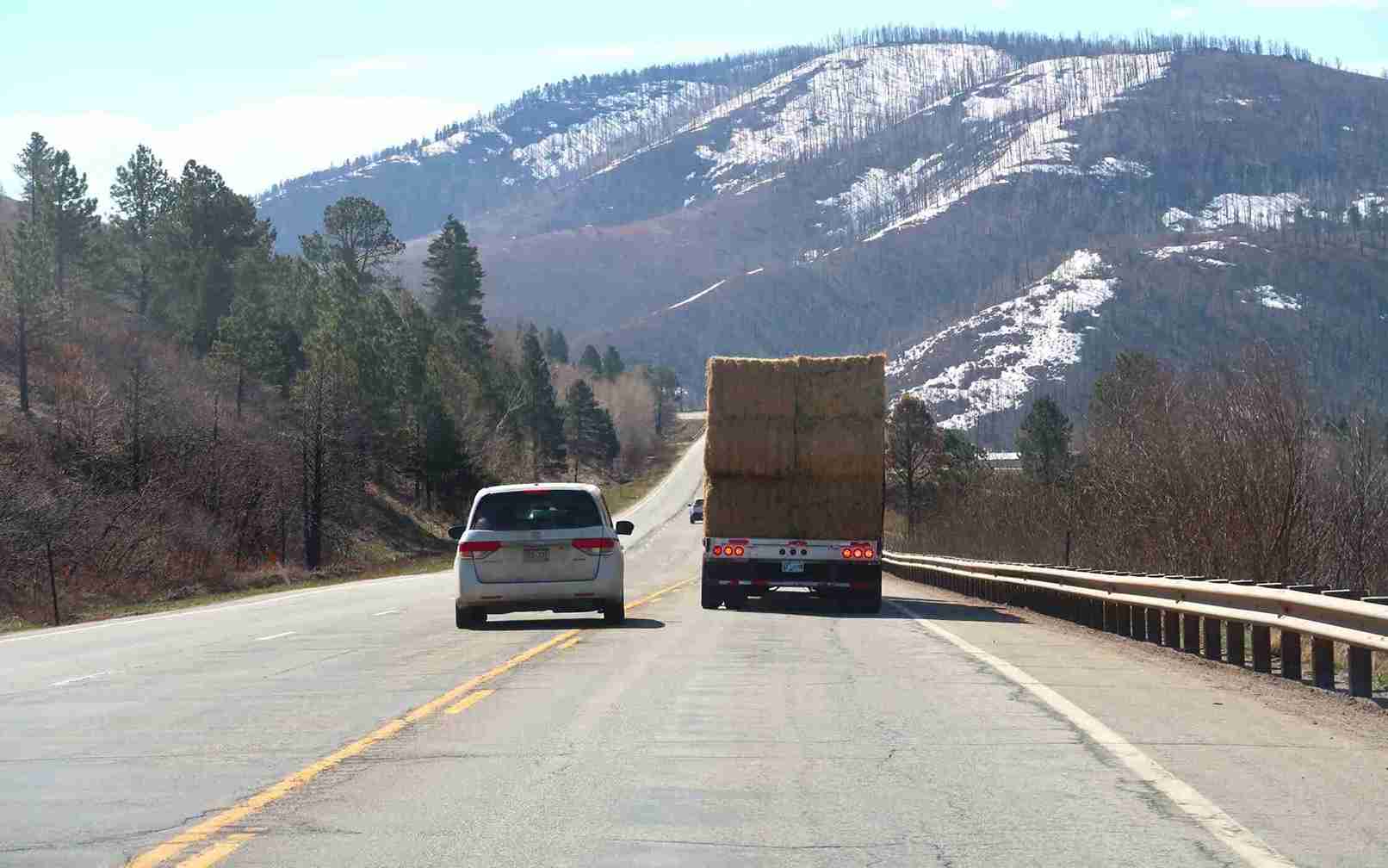
Agricultural truck overloaded with organic manure

By identifying these negligent actions, we can build a strong case to hold both the driver and the trucking company liable for your injuries and losses.

How Our Truck Accident Lawyers Prove Liability

In truck accident claims, the injured victim bears the burden of proof. Even if you know the truck driver’s negligence caused your accident, your testimony alone isn’t enough to hold them or their employer accountable. You must provide substantial evidence to demonstrate their fault.

At Gingras Thomsen & Wachs, our truck accident attorneys conduct a thorough investigation to build compelling evidence, including:

  • Photos and Videos from the Crash Site: Capturing vehicle damage, road conditions, and skid marks helps establish fault.
  • Forensic Evidence from the Scene: Physical evidence like debris or impact marks can reconstruct how the accident occurred.
  • Surveillance Camera Footage: Traffic cameras or nearby business security footage can reveal the crash in real time.
  • Truck’s Dashcam Footage: Onboard cameras may capture the driver’s actions before the crash.
  • Eyewitness Statements: Testimony from other motorists, pedestrians, or bystanders near the accident scene can corroborate your claim.
  • Police Report: The official accident report includes critical details of any violations of trucking regulations and preliminary fault assessments.
  • Medical Reports: Documentation of your injuries connects them to the crash and helps determine personal injury claim damages.
  • Electronic Data Recorder (Black Box) Evidence: This device records speed, braking, and other driving behaviors before impact.
  • Accident Reconstruction Analysis: Specialists use scientific methods to recreate the accident and establish causation.
  • Truck Driver’s Hours of Service Logs: These records reveal whether the driver violated federal rest requirements.
  • Trucking Company’s Dispatch Logs: Examining communication records can show if the employer pressured the driver to speed or skip rest breaks.
  • Freight Manifest Copy: Improper cargo loading or excessive weight may have contributed to the accident.
  • Truck Inspection Reports: Records indicating poor maintenance or mechanical issues can demonstrate negligence.
  • Truck Driver’s Driving and Criminal Record: A history of reckless driving or past violations strengthens your case.
  • Medical Fitness and Drug/Alcohol Test Reports: Evidence of impairment or unfit medical conditions can be key to liability.
  • Testimonies from Other Employees: Fellow truckers or company insiders may reveal unsafe policies or employer pressure.
  • Third-Party Liability Assessment: We investigate whether cargo loaders, maintenance providers, manufacturers, or brokers contributed to the accident.

By gathering and presenting this evidence, we build a strong case to prove liability and help you recover the compensation you’re owed. We will also guide you about avoiding any statements that may adversely affect your claim, including any truck accident blog posts or social media engagement.

Our Truck Accident Lawyers Will Fight to Maximize Your Compensation

Aggressive Negotiation Backed by Trial Preparation

At Gingras Thomsen & Wachs, we approach every truck accident case with the mindset that it may go to trial. From the outset, we gather evidence, consult experts, and construct a compelling case to establish trucking company liability. This trial-ready strategy strengthens our negotiating power, pressuring insurers to offer fair settlements.

Proven Track Record of Settlements and Verdicts

With more than $200 million recovered for clients, our attorneys have a proven history of achieving large financial compensation for truck accident victims. Insurance companies recognize our ability to take cases to court, which usually leads to stronger settlement offers to avoid litigation risks.

law enforcement officers

Prepared to Fight in Court if Necessary

If negotiations fail, we’re prepared to present your case before a jury. Our skilled litigators effectively communicate complex evidence, persuading jurors of the trucking company’s negligence. We fight relentlessly to secure maximum compensation for our clients.

Relentless Advocacy, Proven Results

With Gingras Thomsen & Wachs, you receive aggressive representation backed by decades of experience and a record of success. Our reputation, resources, and commitment ensure that trucking companies and insurers take your case seriously, giving you the best chance at justice.

To schedule your free consultation, call us at 855-954-1186 or contact us online.

Blind spots, also known as “no-zones,” are areas around a vehicle where the driver has limited or no visibility. For 18-wheelers, these blind spots are larger than those of passenger vehicles, making them a major hazard for other drivers on the road.

Awareness of these blind spots can help prevent accidents and ensure safer driving around large commercial trucks. Gingras, Thomsen & Wachs LLP truck accident lawyers can provide you with the strongest legal representation you need to recover maximum compensation for your injuries and losses.

18-Wheeler Blind Spots (Truck No-Zone Areas)

An 18-wheeler’s blind spots pose a danger to other motorists, as the truck’s massive size and restricted maneuverability make sudden adjustments difficult.

Front Blind Spot (Directly in Front of the Truck)

  • Extends approximately 20 feet from the front bumper.
  • As the truck’s cab is elevated, drivers cannot see vehicles that are too close in front.
  • The larger the truck, the longer its front blind spot, especially with sloped hoods or large instrument panels blocking forward visibility.

If a smaller vehicle suddenly slows or stops within this blind spot, the truck driver may not have time to react, leading to rear-end collisions or override accidents, where the truck runs over the smaller vehicle.

Rear Blind Spot (Directly Behind the Trailer)

  • Extends 30 to 50 feet behind the truck’s trailer.
  • Unlike passenger vehicles, trucks lack a rearview mirror that allows them to see directly behind.
  • Limited visibility from side mirrors makes it nearly impossible for the truck driver to detect vehicles tailgating or following too closely.

If a truck brakes suddenly, a following vehicle may not have enough stopping distance, leading to rear-end crashes or even underride accidents, where the smaller car gets lodged under the trailer.

Left-Side Blind Spot (Driver’s Side No-Zone)

  • Begins near the cab and extends diagonally from the truck’s side mirror to the rear of the trailer.
  • This blind spot is smaller than the right-side blind spot but still significant.
  • Limited visibility when merging makes it difficult for truck drivers to detect vehicles passing on the left.

If a driver stays too long in this zone while attempting to pass, the truck driver may not see them, leading to sideswipe collisions or a forced-off-the-road truck crash if the truck shifts lanes.

Right-Side Blind Spot (Larger than the Left-Side Blind Spot)

  • Extends several lanes wide, covering the entire right length of the truck and trailer.
  • Trucks make wide right turns, often swinging left before completing a turn, which can trap smaller vehicles in the right-side blind spot.
  • The truck’s exhaust stacks and frame can further obstruct visibility, making it even harder to detect smaller cars on the right.

If a truck changes lanes or turns right, it could crash or force vehicles off the road, leading to severe or even fatal accidents.

Why Are Trucks’ Blind Spots Dangerous?

Semi truck blind spots create significant risks, including:

  • Sideswipe Collisions: When vehicles remain in a truck driver’s blind spot for too long
  • Underride Accidents: When a vehicle follows too closely and gets trapped under the trailer during sudden braking
  • Turn-Related Crashes: Drivers of large trucks may not see a car in their right-side blind spot when making a wide right turn

How to Safely Share the Road with 18-Wheelers

To minimize the risk of a semi truck accident, follow these safety tips:

  • Avoid truck blind spots if possible. If you must pass, do so quickly and safely.
  • Pass on the left. The left-side blind spot is smaller than the right-side one.
  • Maintain a safe following distance. Stay at least four to five seconds behind a truck.
  • Do not cut off a truck. Give at least 20 feet of space before merging in front.
  • Be cautious when a truck turns. Never squeeze between a turning truck and the curb.

How Our Truck Accident Attorneys Prove Negligence in a Blind Spot AccidenT

Small car passing a semi truck

At Gingras, Thomsen & Wachs, our investigative team moves fast to collect critical evidence. Based on strong evidence, we build a powerful case to hold negligent semi truck drivers and their employers accountable for failing to take proper precautions when maneuvering in blind spot areas.

Black Box Data and GPS Records

An 18-wheeler’s electronic logging device (ELD) records speed, braking patterns, and steering inputs. GPS data can show if the truck suddenly veered into another lane or failed to slow down appropriately before merging. This evidence is critical in proving whether the driver acted negligently by failing to check their blind spots before making a maneuver.

Dashcam and Traffic Camera Footage

Video footage from the dashcam of the tractor-trailers, highway surveillance, or nearby businesses can provide critical proof of whether the truck driver checked their mirrors, used turn signals, or recklessly changed lanes. If the footage shows the truck merging into a lane without proper caution, it can establish liability.

Truck Driver’s Logbooks and Hours of Service (HOS) Violations

Fatigue is a major factor in truck accidents. Federal regulations limit the number of hours a truck driver can operate without rest. If logbooks reveal violations or inconsistencies, it may suggest that driver fatigue contributed to the failure to properly check blind spots in the truck’s mirrors before changing lanes.

Truck Maintenance and Inspection Records

Trucks must have properly adjusted mirrors and functional blind spot detection systems. If the trucking company fails to maintain these safety features, it could contribute to a blind spot accident. Our attorneys will obtain maintenance records to determine if defective equipment played a role.

Eyewitness Statements

Testimonies from other drivers, pedestrians, or passengers can provide an unbiased account of how the accident occurred. Witnesses can confirm whether the truck driver failed to check a dangerous blind spot, changed lanes abruptly, or ignored other vehicles in adjacent lanes.

Accident Reconstruction Reports

We may work with accident reconstruction experts to analyze the crash scene, including vehicle positioning, impact points, and road conditions. By reconstructing the sequence of events, we can determine whether the truck driver’s negligence in monitoring blind spots caused the accident.

Medical Records and Injury Documentation

To establish the severity of your injuries and their direct connection to the crash, we collect medical reports, doctor’s evaluations, and medical expert testimony. We will prepare a strong claim for damages that covers the full extent of your injuries and losses, including current and future medical expenses, lost wages, and pain and suffering.

Get Our Experienced Truck Accident Lawyers on Your Side

If you or a loved one has been injured in a car, truck, or motorcycle accident, the dedicated attorneys at Gingras, Thomsen & Wachs are ready to fight for the justice you deserve. With more power, more fight, and the most heart, we have spent decades helping accident victims in Wisconsin and Minnesota recover more than $200 million in compensation.

We work on a contingency fee basis, so you pay nothing unless we win your case. At Gingras, Thomsen & Wachs, we treat every client like family. To schedule your free consultation, call us at 855-954-1186 or contact us online.

https://madison.com/news/local/crime-courts/article_17ba5006-002c-11f0-ac8e-b7d802838457.html

Chris Rickert I Wisconsin State Journal Mar 18, 2025

The parents of two boys who died last year after falling through the ice of a retention pond at the Sun Prairie apartment complex where they lived are suing the city and school district and the school bus company that dropped the boys off, claiming they bear some responsibility for the deaths.

Antwon Amos Jr., 6, and Legend Sims, 8, died Jan. 8 and Jan. 6, respectively, after falling through the ice of the city-owned pond behind one of the main buildings at the Wildwood at Main apartment complex on the afternoon of Jan. 5, according to accounts at the time from their family and Sun Prairie and Dane County officials. The boys had just been dropped off by a Kobussen Buses school bus after attending classes at Royal Oaks Elementary School.

The lawsuit filed Wednesday alleges the city of Sun Prairie, Sun Prairie School District and Kobussen knew the area where students were being dropped off was dangerous, and that children had been playing in the pond.

A pair of young boys smiling

They “knew the pond was an open and obvious danger, knew kids were playing in the pond, knew the pond was a dangerous and deadly attractive nuisance, yet failed to take reasonable measures to ensure students, including Antwan Devonte Amos, Jr. and Legend Sims, were safe” while in the care of the district, the suit says.

It further alleges that the Sun Prairie Fire and Police departments did not have the proper training and equipment to rescue the boys after they went out onto the thin ice of the pond and fell through.

When police and firefighters “arrived on scene, they attempted to reach the boys using a throw rope. When that effort failed, they continued throwing the rope without success,” the suit says, and then “failed to take any other measures and/or change their rescue tactics to save the boys.”

No one met the boys at the bus stop when they were dropped off on Jan. 5, one of the parents’ attorneys, Robert Gingras, told the Wisconsin State Journal in May. He said the boys’ mother, Kiana Sims, had planned to meet the boys at the bus stop that day but that she couldn’t make it because a person she was having an appointment with arrived late to the appointment.

The suit largely echoes a claim made against the city and district last April. Photos included with that show first responders throwing ropes to the boys partially submerged in the pond, as well as divers trying to reach them. Gingras said Monday that the boys were conscious and breathing for at least eight minutes after the fire and police departments arrived. Gingras has also alleged that the school district was aware that children had been playing at the pond and that it was a danger and sent an email to parents in midDecember “expressing their concern that children were going down to the pond.”

Beach picture in grayscale

Family of boys who drowned in Sun Prairie retention pond seeks damages from city, school district

Chris Rickert I Wisconsin State Journal

“In fact, children were getting on the school bus in the morning with their pants wet from being in the pond,” he said in May, and in light of those concerns, the city had a duty to put a fence around the pond – which only happened about two weeks after the boys died.

The suit does not ask for a specific amount in damages but notes that under Wisconsin law, parents can recover up to $500,000 for the wrongful death of a child. The claim filed in April by the boys’ estates and their parents sought more than $700,000 from the city and district for pain and suffering, funeral expenses and other costs related to the boys’ deaths.

The school district and city declined to comment on the suit and Kobussen did not immediately respond to requests for comment Monday. But school district policy in place at the time of the accident says that students in grades kindergarten and up are the responsibility of their parents or caregivers up until the time “the student boards the bus for school” and then again when “he/she gets off the bus on the return trip.”

District spokesperson Patti Lux also said in January 2024 that the bus stop where the boys were dropped off was at the corner where the pond is located, but “not located in front of the retention pond.”

The city installed a 6-foot-high chain-link fence around the retention pond within two weeks of the boys’ deaths but also has pointed out that there is no ordinance or zoning regulation requiring fencing around the city’s bodies of water.

“However, the city has installed signage around the ponds to educate the public and warn of hazards,” spokesperson Jake King said Monday, and “vegetative buffers are being installed around some ponds as natural barriers.”

He said the city will continue to follow state Department of Natural Resources and U.S. Environmental Protection Agency guidelines on pond design.

Under state law, people making claims against local government, including school districts, must first make them with the governments. If local officials deny them, the claims can be made in lawsuits filed against the government in county circuit court.

Photos: Island life endangered as hurricanes get stronger, deadlier
View Of A Beach
Additional News Coverage:

https://madison.com/news/local/crime-courts/article_17ba5006-002c-11f0-ac8e-b7d802838457.html

Dana Wachs of our firm proudly represented a young Girl Scout member and her family in a significant product liability lawsuit following a devastating incident. While participating in a community service project cleaning up trash along a rural highway, the minor was struck and seriously injured by a vehicle. The driver, who lost control of his car, had inhaled aerosol dust remover—a product commonly abused for its intoxicating effects.

Aerosol dusters, marketed as dust and lint removers, are often misused to achieve a “high,” causing severe impairment due to the chemicals used as propellants. Tragically, this misuse led to the driver crashing into troop members and their families, resulting in life-altering injuries.

Our legal team pursued claims against the product’s manufacturer, distributor, and retailer, holding them accountable for the dangers posed by their product. The case reached a settlement, providing justice and support to the injured minor and her family.

We at GTW are steadfast in our commitment to holding corporations responsible for their dangerous products and advocating for the safety and well-being of our clients and the community. Cases like this highlight the importance of corporate accountability in preventing harm and ensuring safer products for everyone.


Dana Wachs of our firm successfully settled a significant product liability case against an ATV manufacturer whose defective axle caused a catastrophic failure, resulting in severe injuries that significantly changed the course of our client’s life. This case underscored the critical need for rigorous quality control in manufacturing and the devastating consequences when safety standards are compromised.

Manufacturers have a responsibility to ensure their products are safe for consumers. When they fail to meet this obligation, the impact can be life-altering. By holding the manufacturer accountable, we not only secured justice for our client but also emphasized the importance of protecting consumers from preventable dangers.

Our firm is committed to fighting for those injured by defective products and pushing for higher safety standards to protect everyone.

You know how sometimes you hear legal terms thrown around, and they all start to blur together? “Premises liability” and “slip and fall” are two that tend to get lumped together, but they aren’t exactly the same thing. If you’ve suffered injuries on someone else’s property, it helps to know the difference between slip and fall and premises liability.

Slip sign

First Things First: Understanding Premises Liability

Think of premises liability as the big umbrella. It’s the overall legal concept that says if someone owns or controls property, they have a responsibility to keep it reasonably safe for people who are legally on that property.

So if you slip on a wet floor at the grocery store, trip over a broken step at someone’s house, or get assaulted at a bar due to negligent security, it all falls under this general idea of premises liability. It’s basically the legal way of saying, “Hey, you didn’t keep your property safe, and someone got hurt because of it.”

What Is a Slip and Fall?

A slip and fall accident is just one type of premises liability case. Slip and fall cases involve, as you may have guessed by now, someone slipping and falling because of a dangerous condition that existed on someone else’s property.

Here are a few classic examples:

  • You walk through a store and hit a slick patch of floor with no warning sign.
  • Ice on an apartment walkway takes you down hard.

So, while every slip and fall claim is a type of premises liability, not all premises liability cases pertain to slip and fall accidents.

Slip and Fall vs. Trip and Fall

When people hear the terms “slip and fall” and “trip and fall,” it is easy to assume they mean the same thing. In reality, the two are quite different, and the cause of the fall plays a role in figuring out responsibility.

Slip and Fall

A slip and fall usually happens when your foot loses traction on a slick or unstable surface. Common examples include:

  • Wet floors inside a store or restaurant
  • Icy sidewalks during Wisconsin winters
  • Spilled liquids or freshly mopped tiles

In these situations, your feet often slide out from under you, leading to a backward or sideways fall.

Trip and Fall

A trip and fall occurs when your foot strikes or gets caught on something in your path. This can happen if there is:

  • An uneven sidewalk crack
  • A loose floor mat or rug
  • Objects or clutter left in a walkway

Here, you are more likely to fall forward. While both can cause serious injuries, the underlying cause helps determine who may be legally at fault.

Other Common Premises Liability Situations

Let’s say you weren’t injured due to a fall. Premises liability law can still apply in other situations, like:

  • Dog bites
  • A shelf collapsing in a store
  • Poor lighting that leads to an accident
  • Inadequate security resulting in assault
  • Falling branches, faulty handrails, or even hidden hazards in rental units

In essence, if you’re on someone’s property and the property owner fails to take reasonable steps to keep it safe, and you suffer injuries, you may have a right to seek compensation.

What Has to Be Proven in These Cases?

Whether it’s a slip and fall or something else under the premises liability umbrella, the core of any case usually comes down to four vital legal elements for proving negligence.

  • There was a dangerous condition: Something was unsafe, such as a spill, broken step, or icy walkway.
  • The property owner knew or should have known about it: If the hazard had been there long enough, the owner should have noticed and done something.
  • They didn’t fix it or warn anyone: Owners have a legal duty to take remedial action to either fix the issue or provide a clear warning if a dangerous condition exists.
  • You got injured because of it: Your injury needs to be tied directly to that unsafe condition. It helps to have medical records, photos of the scene, or witness statements.

Where Do These Incidents Usually Happen?

Unfortunately, they can happen virtually anywhere. Here are some common spots:

  • Grocery stores (slippery spills, cluttered aisles)
  • Restaurants (wet floors, loose rugs)
  • Retail stores (items falling from shelves)
  • Office buildings (poor lighting, obstacles in walkways)
  • Apartment buildings (icy sidewalks, broken steps)
  • Private homes (loose handrails, unmarked hazards)
  • Public parks or buildings (poor maintenance)

No matter where it happens, the important question is always the same: Did the property owner take reasonable steps to prevent it?

Photo of Slip and fall

What Wisconsin Law Says About All This

In Wisconsin, property owners and occupants have a legal duty to keep their premises reasonably safe. But how much care they owe depends to an extent on your status when you’re on the property.

  • Invitees: These are people who are on the property for business reasons, like customers in a store. The owner owes them the highest level of care.
  • Licensees: These are social guests like friends or family who come over for dinner, for example. Property owners still have to keep things safe for themselves, but the duty is a bit more relaxed.
  • Trespassers: Even people who aren’t supposed to be on the property have some protections. Under the “attractive nuisance doctrine,” children are protected from being drawn to dangerous features like pools or construction equipment.

What If You Were Partly to Blame?

Let’s say you were looking at your phone and didn’t see the warning sign about the wet floor. Does that mean you don’t have a personal injury claim for fair damages? Not necessarily. Wisconsin uses modified comparative negligence. That means if you were partly at fault, you can still get compensated as long as you were less than 51% at fault.

Your settlement just gets reduced by your percentage of fault. So if a jury says you were 20% at fault and your damages are $300,000, you could still walk away with $240,000.

Choose the Leading Wisconsin Premises Liability Attorneys for Your Case

If you or someone you love has been injured on another’s property, you need a lawyer with more legal firepower and the most heart. Gingras, Thomsen & Wachs treats injured victims like family. Our slip and fall lawyer will fight to hold the responsible party accountable for maximum damages.

For nearly four decades, we have fought for thousands of clients to get them the financial compensation they’re owed. To schedule your free consultation, call us at 855-954-1186 or contact us online.

Accidents involving 18-wheelers can be catastrophic, often leading to severe injuries or fatalities. One common cause of these accidents is the truck’s blind spots—areas around the vehicle that the driver cannot see through mirrors, creating dangerous situations for other drivers on the road.

An 18-wheeler is one of the most common types of commercial vehicles on the roads. These vehicles consist of a tractor and trailer. An 18-wheeler is also known as a tractor-trailer or semi-truck. The massive size and structure of an 18-wheeler introduce unique challenges on the road.

One of the most dangerous elements of semi-trucks is their blind spots. Blindspots are also referred to as “no zones.” An 18-wheeler can have multiple blindspots, so the driver needs to be aware of all these spots. Other road users, including drivers of smaller vehicles and motorcycles, should also be mindful of these blind spots to avoid lingering in those areas.

Photo of a truck

Understanding 18-Wheeler Blind Spots

The average 18-wheeler can be 70-80 feet long, 8.5 feet wide, and about 13.5 to 14 feet tall. This means there are many areas around the truck where the driver may have limited to no visibility. The length and height of the hood of the truck create a large and unavoidable blind spot right in front of the driver. This blindspot can extend from the grill to about 20 feet ahead of the truck. This is often considered a major danger zone for other roadway users, so try to avoid changing lanes or entering the roadway right in front of a semi-truck.

Another major blind spot is the back of the truck. As there is no rear-view mirror, the truck driver is not able to see what is happening behind the trailer. While you should never drive too closely to any vehicle, it is especially dangerous to tailgate an 18-wheeler. Crashing into a large commercial vehicle is more dangerous for cars as passengers in the smaller vehicle can suffer more serious injuries.

The driver of an 18-wheeler has good visibility through the side view mirrors on both sides of the truck; however, the sides also have blind spots. Depending on the angle of the side view mirror, there is a blind spot located between the end of the cab and the midpoint of the trailer. The right side of the semi-truck is the worst blind spot for the truck driver because it is typically wider and extends further back compared to the left side.

To avoid the side blind spots, you can slow down and merge behind the semi-truck or make sure you see the truck driver in the side mirror. If you can’t see them, they probably can’t see you. Avoid driving alongside the truck for long by either speeding up or slowing down to get out of the blind spot.

If you want to prevent accidents with trucks as a result of blind spots, you should try to stay out of truck blind spot locations as much as possible. In addition, you should communicate your intentions with the truck driver using turn signals. Whether you are merging into the lane next to the truck, or driving behind it, try to maintain a safe distance from the truck. If a truck is tailgating, it’s important to stay calm and avoid making sudden stops. Instead, use your turn signals to communicate what you intend to do and give the truck some space to pass if you can. This approach not only helps keep you safe but also makes the roads safer for everyone.

Legal Implications of Blind Spot Accidents

Blindspots not only increase the risk of an accident occurring, but they also have legal implications for claims and lawsuits. In most cases, liability for blind spot accidents is based on negligence.

The type of vehicle involved can also affect the legal landscape. For instance, commercial vehicles, such as trucks and buses, often have larger blind spots and may be subject to stricter regulations. The driver of an 18-wheeler may be considered liable for an accident if they failed to check their blind spots before changing lanes or merging. However, if other road users did not take reasonable actions to avoid a collision, they could be held liable for the accident. Working with a Wisconsin truck accident lawyer, like Gingras, Thomsen & Wachs, LLP, can be invaluable in navigating the complexities of fault and compensation in such cases.

Victims of truck accidents are often overwhelmed with the complexities of a truck accident case. If you are in such a situation, we welcome you to get in touch with us at Gingras, Thomsen & Wachs, LLP.

How Can Gingras, Thomsen & Wachs LLP Help You?

If you’ve been involved in an accident with a large truck due to blind spots, Gingras, Thomsen & Wachs, LLP is here to help. Our experienced team is experienced in handling trucking accident cases, particularly those caused by blind spots, which are often the result of negligent driving or inadequate training.

We’ll work to thoroughly investigate the accident, gathering evidence like accident reports, trucker logs, and expert testimony to determine fault. Whether the truck driver failed to check their blind spots, or the trucking company did not ensure proper safety protocols, we’re prepared to hold the responsible parties accountable.

By choosing Gingras, Thomsen & Wachs, LLP, you can trust that your case will be handled with the utmost care and expertise, ensuring you get the compensation you deserve for medical expenses, lost wages, pain and suffering, and more.

If you or a loved one has been involved in an accident with a semi-truck, contact us today for a free consultation. We’re here to fight for your rights.

Oftentimes, truck accidents result in increased damage because of the size and weight of commercial trucks. That can result in more severe and permanent injuries to the other drivers. Truck accident cases are usually more complex as they involve many liable parties, trucking regulations, and serious injuries. Each case is unique and the settlement you receive for your case could be quite different from the average amount. That is why it is important to contact an experienced truck accident law firm like Gingras, Thomsen & Wachs, LLP to have your cases fully evaluated.

Photo of damaged truck

Definition and Types of Truck Accidents

Truck accidents involve large vehicles such as delivery trucks, commercial vehicles, and 18-wheelers. The most common types of truck accidents include jackknife accidents, rollover accidents, rear-end collisions, and accidents from failing to yield the right of way. However, truck accidents can occur in various forms and circumstances. The type of accident can also play a role in the average settlement amount. For example, a rollover collision has a higher likelihood of causing fatalities, severe injuries, and extensive property damage. It may lead to higher settlement amounts compared to a relatively minor collision with minimal injuries.

Typical Range of Settlement Amounts for Truck Accidents

The average settlement for truck accidents depends on several factors, including the location and damage. The amount can vary from a few thousand dollars to millions of dollars.

If the accident results in minor injuries, then you can expect the settlement to be less than $100,000. However, if there were severe injuries, such as spinal cord damage or traumatic brain injuries, then the amount is more likely to be hundreds of thousands, if not millions, of dollars.

Accidents that involve a wrongful death can even be higher depending on the pre-death injuries. The average also depends on the type of truck accident and facts regarding liability.

Factors Influencing Truck Accident Settlements

The biggest factor that influences a truck accident settlement is the severity of the injuries of the people involved in the accident. The most devastating injuries and disabilities often require long-term care, which can be expensive. Such injuries can also result in a major loss of income and earning capacity for the victims, and this is reflected in the high settlement amounts in such cases.

Another key factor is the degree of liability established in the case. There could be multiple parties liable for the accident. If the victim was partially at fault for the accident, their compensation could be lowered based on their percentage of fault in the accident. For example, a driver in a passenger car is speeding and doesn’t yield while a truck is making a turn. In this scenario, the car driver may be partially responsible for the accident. Even if the truck is making an illegal turn, the other driver’s speeding means they could be partially at fault.

Truck accident settlements also depend on how strongly you negotiate with the opposing parties. Many victims make the mistake of accepting an unreasonably low offer, not fully realizing the full extent of their damages. In some cases, victims accept an early offer to get some financial assistance to help them manage the financial stress of suffering an accident. However, you should always consult an attorney before accepting any settlement offer.

Steps to Take Immediately After a Truck Accident

In order to document what happened and preserve the evidence, you should take certain steps. Your immediate priority should be ensuring the safety of yourself and others involved in the accident. Call 911 so emergency responders can provide medical assistance to anyone injured and law enforcement can document the accident. Such documentation or records can play a key role in your injury claim or lawsuit.

While you are at the accident scene and are in stable condition, you can start gathering evidence such as photos or videos of the crash site, road conditions, injuries, traffic signs, and anything else that could be relevant to your case.

Exchange information with other parties involved in the accident. Make sure you have the contact information and insurance details of all parties involved in the accident. You also need to notify your insurance company about the accident, but don’t share any unnecessary information. The insurance provider may offer a quick settlement but don’t accept it before consulting with an attorney. It helps to involve an attorney early in the process as they can protect your rights and help you navigate the legal complexities of truck accident cases.

To ensure you get into a strong position to negotiate with the insurance company and secure a full and fair settlement, you need to follow all medical advice and get all recommended treatment. In addition, keep track of your expenses, including lost wages, property damage, out of pocket expenses, and medical bills.

Importance of Legal Representation for Maximizing Settlement Outcomes

Securing appropriate settlements in truck accident cases often involves complex challenges, such as understanding intricate insurance policies, navigating multi-party liability, and understanding how the trucking regulations apply to your case. At Gingras, Thomsen & Wachs, LLP, we can help you overcome these hurdles and secure maximum settlement for your case. Getting help from an experienced truck accident attorney can be essential for building a strong case and ensuring you receive the compensation you deserve.

Our attorneys are well versed in local and state trucking laws and have a proven track record of helping truck accident victims get justice. We can help you with all legal aspects of the case, including gathering evidence, completing paperwork, and negotiating with the insurance company. Having an experienced attorney on your side can be crucial for maximizing your settlement. If you’ve been involved in a truck accident, please call us to schedule a free consultation.

Emotional distress is one of the most difficult things to prove in court. In order to prove emotional distress, you need to show that an injury has impacted your life and that it could potentially continue to affect you in the future.

Physical injuries with physical symptoms are far easier to prove, but when another person’s actions or inactions caused you emotional trauma, you may still have the right to recover compensation. Emotional distress requires a lot to prove you are truly hurt, and the best way to be successful with emotional distress claims is to hire a personal injury lawyer in Wisconsin to represent you throughout your emotional distress case. 

Gingras, Thomsen & Wachs, LLP is a personal injury law firm with experienced personal injury attorneys who represent victims with emotional distress in their personal injury claims. In this blog post, we discuss what is considered as emotional distress, how to prove emotional distress, and how an experienced personal injury attorney can help.

Suffering anxiety

Understanding Emotional Distress

Emotional distress is a different type of pain and suffering that follows any type of accident in a personal injury lawsuit. Essentially, it is a severe emotional reaction or emotional trauma following traumatic experiences, such as a car accident.

Common examples of emotional distress include:

  • Depression
  • Anxiety
  • Panic attacks
  • Post-traumatic stress disorder (PTSD)
  • Mood swings
  • Social isolation
  • Bodily harm
  • Insomnia
  • Suicidal thoughts

Emotional distress in any form can be debilitating, keeping you from living a normal life and affecting your overall well-being. Often, emotional distress can be as debilitating as physical pain. However, proving emotional distress can be complicated, which is why it is recommended to have an experienced attorney represent you.

How Emotional Distress Differs from Physical Injuries

It is always more challenging to prove emotional distress and severe emotional suffering. Physical injuries can be shown through photographs and records of other types of medical tests and treatments. 

Emotional distress is more complicated because every person processes these stresses in their own way. Proving emotional distress requires knowing how to demonstrate the ways that it has impacted your life and turned it upside down. Emotional distress evidence includes testimony from mental health professionals and other medical professionals, medical records, family members, and witnesses. With this evidence, it is possible to recover compensation as you would for a physical injury. 

How to Prove Severe Emotional Distress

If you have suffered emotional distress, you will need to prove it to get emotional distress compensation. First, it must be determined whether it was an intentional infliction of emotional distress or a negligent infliction of emotional distress. 

The difference between two is that an intentional infliction is one where someone acts deliberately to cause severe emotional harm, such as through threats of physical harm or through outrageous conduct that leads to your mental anguish. Negligent infliction involves an unintentional act that causes mental suffering. 

Both types will require emotional suffering evidence. In order to prove emotional distress after a car accident or other traumatic event, unlike physical injuries, the challenges are far greater. Here is how lawyers can show proof in emotional distress cases:

Intensity of Your Emotional Pain

The intensity of your emotional anguish and psychological pain such as showing that you have endured night terrors or experiencing vehophobia (the fear of driving) as it disrupts your daily life is needed for emotional distress damages. The more intense the emotional stress on a victim’s life, the more likely it is to receive compensation for psychological injury. 

Duration of Emotional Impact

Demonstrating the lasting effects that your mental health condition has had on daily life can also be instrumental in proving your case. Medical records for therapy sessions can corroborate the length of time you’ve suffered from these impacts.

Related Physical Injuries

Any physical manifestation that has come from your injuries can reveal the depth of your psychological injuries. When your emotional struggles and psychological trauma are linked to a physical injury, it can help you in seeking justice for your claim.

Underlying Causes

The accident that caused your injuries additionally will demonstrate the severity of mental harm you’ve experienced. In emotional distress lawsuits, it is more likely you will be able to prove the level of harm based on the severity of the incident. For example, if you were rear-ended and you had no physical injuries, you would likely not be granted compensation for your emotional distress. However, if you were in a head-on crash, suffered severe injuries, and witnessed other passengers die on the scene, it would make more sense to award you these damages.

Medical Testimony

Along with medical bills, healthcare professionals can also testify about the ways your accident has caused your mental condition. With documentation, it will be easier to prove that the accident has played a vital role in your state of suffering. 

The Importance of Hiring a Personal Injury Lawyer for an Emotional Distress Claim

Lawyer looking evidence

In these types of cases, the complex legal processes are often too difficult to handle on your own. If you have endured physical injuries that have affected your mental state, it is always best to work with an attorney. 

Attempting to prove that you have experienced emotional distress while you try to get back to normal may further cause issues that affect your overall health. With the help of a lawyer, you have an advocate who knows how to present the evidence while getting you the medical care you need to heal. 

Calculating emotional distress damages is important to understand how much you are owed in compensation. A lawyer will be able to evaluate every aspect of your case and find the best way to hold the liable party responsible for your suffering.

Gingras, Thomsen & Wachs, LLP is committed to representing victims in these scenarios to get them the money they deserve. If you or a loved one is enduring agony from mental and physical impacts after an accident someone else negligently caused, schedule a free consultation to learn more. 

Facebook-circled Facebook-circled
Linkedin-circled Linkedin-circled
Instagram Instagram
Youtube-play Youtube-play
Rss Rss
101 Putnam St
P.O. Box 390

Eau Claire, WI 54703

8150 Excelsior
Drive

Madison, WI 53717

219 N Milwaukee St
Suite 520

Milwaukee, WI 53202

Nationally Recognized Law Firm

Super Lawyers - profiles.superlawyers.com